-

Learn about the things to know about Update Domains in Azure
In Azure, Update Domains (UDs) play a crucial role in maintaining high availability during planned maintenance and platform updates. Understanding how update domains work and how to configure them effectively is essential for ensuring that your applications experience minimal downtime during updates, reboots, or patches.… [ Read More ]
-
Learn about the things to know about fault domains in Azure
Fault Domains (FDs) are a critical concept in Azure's high availability and resiliency strategy. They are designed to help you ensure that your application remains operational even when hardware failures or other infrastructure issues occur. Here's everything you need to know about Fault Domains in… [ Read More ]
-
Learn about the things to know about Azure Virtual Machine Scale Sets
Azure Virtual Machine Scale Sets (VMSS) are a powerful feature in Azure that enables the automatic scaling and management of a set of identical Virtual Machines (VMs). With VMSS, you can deploy, manage, and automatically scale a set of VMs, which is ideal for applications… [ Read More ]
-
Learn about the things to know about Azure Virtual Machine Autoscaling
Azure Virtual Machine Autoscaling is a powerful feature that automatically adjusts the number of virtual machines (VMs) in a Virtual Machine Scale Set (VMSS) based on demand, improving performance while managing costs. Autoscaling is crucial for applications with fluctuating workloads because it ensures that you… [ Read More ]
-
Learn about the things to know about Availability Zones in Azure
Availability Zones (AZs) in Azure are a key component of the platform's high availability and disaster recovery strategy. They allow you to distribute your applications and resources across physically separate locations within an Azure region, each with independent power, networking, and cooling to ensure resilience… [ Read More ]
-
Learn about the things to consider when using Virtual Machine Autoscaling on Azure
Autoscaling is a powerful feature in Azure that automatically adjusts the number of resources (e.g., virtual machines, app instances, or containers) in response to changing workload demands. Properly configuring autoscaling ensures that applications remain responsive under varying loads while optimizing costs. However, there are several… [ Read More ]
-
Learn about the things to consider when using Availability Zones in Azure
When using Availability Zones (AZs) in Azure to ensure high availability, fault tolerance, and disaster recovery for your applications, several key factors need to be considered. Properly leveraging Availability Zones can make a significant difference in achieving the desired level of resilience and minimizing downtime.… [ Read More ]
-
Learn about the Authorization options in Azure Storage
Azure Storage provides several authorization options to control access to resources securely. The choice of method depends on your security requirements, the type of storage account, and the level of access control you need. Below are the key authorization options for Azure Storage. Azure Active… [ Read More ]
-
Learn about System Routes in Azure
In Azure, system routes are the default routes automatically created by Azure in the route table of a virtual network (VNet). These routes control the flow of traffic between resources in the VNet, across connected VNets, and to external networks like the internet. They ensure… [ Read More ]
-
Learn about Service Endpoints in Azure
Azure Service Endpoints provide secure and direct connectivity between a Virtual Network (VNet) and Azure services over the Azure backbone network. They allow resources in a VNet to communicate with Azure services (e.g., Azure Storage, Azure SQL Database) without requiring a public IP address, improving… [ Read More ]
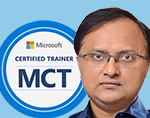
Rajnish Kumar Jha, MCT: DevOps, Azure, Microsoft Certified Trainer
DevOps, Cloud, Azure resources & blog
Author: Rajnish Kumar Jha
Featured Courses

Rajnish Kumar Jha
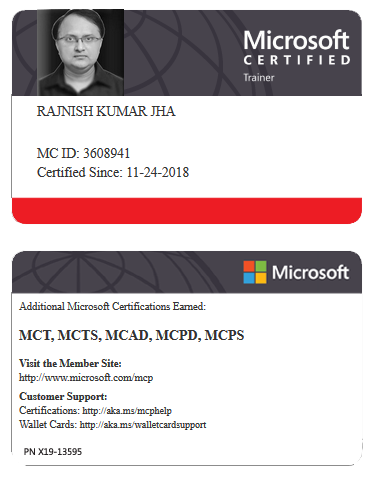
MCT, MCSA, MCSE, MCAD, MCPD, MCTS, MCSD
My name is Rajnish Kumar Jha. I am Technical architect on Azure Cloud and .NET since 21+ years. I’ve worked for pioneer companies and as freelance trainer/consultant helping my clients to achieve their IT goals.
I find blogging, a great way to share back what I’ve learned all through my professional journey. You are welcome to connect or share feedback/suggestion here or through an email.
My MCT card (Microsoft)
My Certifications




Popular Posts





Stay Connected
Unlock the full potential of Azure Cloud with me
– Your trusted guide to Azure mastery!
SUBSCRIBE
My newsletter for exclusive content and offers. Type email and hit Enter.
No spam ever. Unsubscribe anytime.
Read the Privacy Policy.