-

What is DNS and how does DNS work
What is DNS? DNS (Domain Name System) is a foundational technology for the internet, acting as the "phonebook" of the web. It translates human-readable domain names (like www.example.com) into machine-readable IP addresses (like 192.168.1.1 or 2001:0db8::1) that computers and devices use to communicate with each… [ Read More ]
-
What are the things to know about Azure Virtual Machine Autoscaling
Azure Autoscaling is a critical feature for efficiently managing cloud resources based on demand, ensuring applications remain responsive and cost-effective. By automatically adjusting the number of resources (such as Virtual Machines, App Service instances, or containers) based on defined performance metrics, autoscaling allows you to… [ Read More ]
-
What are the different Azure Storage Account types
Azure provides several types of storage accounts, each designed to meet specific needs based on performance, redundancy, and workload requirements. Understanding the different storage account types is essential for optimizing cost and performance. General-Purpose v2 (GPv2) GPv2 accounts are the most versatile and commonly used… [ Read More ]
-
What are the Authorization options for Azure Storage
Azure Storage offers several authorization options to control access to your storage resources. These options are designed to provide flexible and secure ways to authenticate users and applications, depending on your needs and the specific Azure services you are using. Here are the main authorization… [ Read More ]
-
Vertical and Horizontal Scaling on Azure – A Comparative study
Scaling is an essential part of cloud architecture that allows applications to meet changing demands efficiently. On Azure, scaling can be approached in two primary ways: Vertical Scaling (Scaling Up/Down) Horizontal Scaling (Scaling Out/In) Both have distinct advantages, trade-offs, and use cases. Understanding the difference… [ Read More ]
-
Various ways to create and connect to the Virtual Machine in Azure
In this guide, we'll walk through the process of creating a Virtual Machine (VM) in Azure and connecting to it using three different methods: Azure Portal (UI-based) Azure CLI (Command Line Interface) PowerShell (Azure PowerShell Module) We'll also cover how to connect to the VM… [ Read More ]
-
Various Load Balancing options in Azure and how to choose among them
Azure offers several load balancing options to cater to a wide range of scenarios, including web applications, APIs, microservices, and hybrid environments. Here’s an overview of the options and guidance on choosing the right one. Azure Load Balancer A Layer 4 (TCP/UDP) load balancer suitable… [ Read More ]
-
Things to know about Azure App Service Deployment Slots
Azure App Service Deployment Slots provide a powerful way to manage different versions of your web application for testing, staging, or production. A deployment slot is a live app that is deployed to a specific environment but not yet exposed to the public. Once you're… [ Read More ]
-
Things to consider when using Azure App Service for App Security
When using Azure App Service for deploying your applications, security should be a top priority. Azure App Service provides various features and controls to protect your application, but it’s important to carefully consider how to best configure these features for your specific needs. Here are… [ Read More ]
-
Things to consider when creating backups and restoring backups of App Service app
When creating and restoring backups of your Azure App Service app, there are several important considerations to ensure that the backup process is efficient, reliable, and tailored to your needs. Below are key factors to take into account when managing backups and restoring your Azure… [ Read More ]
Rajnish Kumar Jha, MCT: DevOps, Azure, Microsoft Certified Trainer
DevOps, Cloud, Azure resources & blog
Author: Rajnish Kumar Jha
Featured Courses

Rajnish Kumar Jha
MCT, MCSA, MCSE, MCAD, MCPD, MCTS, MCSD
My name is Rajnish Kumar Jha. I am Technical architect on Azure Cloud and .NET since 21+ years. I’ve worked for pioneer companies and as freelance trainer/consultant helping my clients to achieve their IT goals.
I find blogging, a great way to share back what I’ve learned all through my professional journey. You are welcome to connect or share feedback/suggestion here or through an email.
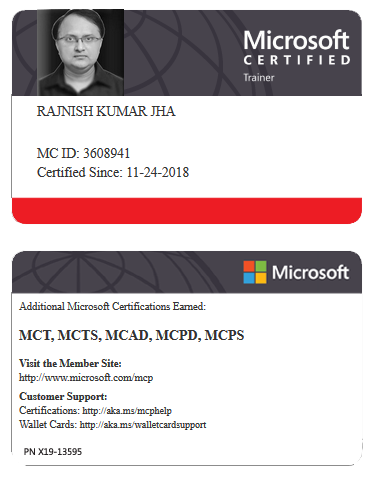
My MCT card (Microsoft)
My Certifications


Popular Posts





Stay Connected
Unlock the full potential of Azure Cloud with me
– Your trusted guide to Azure mastery!
SUBSCRIBE
My newsletter for exclusive content and offers. Type email and hit Enter.
No spam ever. Unsubscribe anytime.
Read the Privacy Policy.