-

Learn how to work with Azure Backup service
Azure Backup is a cloud-based backup solution offered by Microsoft Azure, designed to protect data and applications in various environments, including on-premises, hybrid, and cloud-based systems. It allows businesses to back up their critical data and applications and securely store them in the cloud, ensuring… [ Read More ]
-
Learn how to create, deploy and verify Azure Container Apps
Creating, deploying, and verifying Azure Container Apps (ACA) involves several steps, from setting up the environment to deploying your containerized application and verifying its deployment. Here's a step-by-step guide. Step 1: Set Up Prerequisites Before you create an Azure Container App, ensure you have the… [ Read More ]
-
Azure Container Instances (ACI) vs Azure Container Apps (ACA) vs Azure Kubernetes Service (AKS)
When comparing Azure Container Instances (ACI), Azure Container Apps (ACA), and Azure Kubernetes Service (AKS), it’s important to consider factors such as ease of use, scalability, flexibility, complexity, and the specific use cases they are designed for. Each of these services has its own strengths… [ Read More ]
-
Comparing Container Management Solutions in Azure
Azure offers a variety of container management solutions to help deploy, scale, and manage containerized applications. The most prominent ones are: Azure Kubernetes Service (AKS) Azure Container Instances (ACI) Azure Container Apps Azure Service Fabric (with Containers) Each of these solutions is suited for different… [ Read More ]
-
The things to consider when using Azure Container Apps
When using Azure Container Apps, there are several important factors to consider to ensure that your deployment is efficient, cost-effective, and scalable: Workload Requirements Scaling Needs: If your application requires horizontal or vertical scaling, configure auto-scaling based on CPU, memory, or custom metrics. Consider your… [ Read More ]
-
Learn the things to know about Azure Container Apps
Azure Container Apps is a fully managed service from Azure that enables you to run containerized applications without the need to manage the underlying infrastructure. It is designed for microservices and event-driven architectures and provides a simplified experience for developers looking to deploy and scale… [ Read More ]
-
Create and configure Container Instance and verify deployment of Container Instance in Azure
To create, configure, and verify the deployment of a Container Instance in Azure, you'll need to follow a few steps using the Azure Portal, Azure CLI, or Azure PowerShell. Below is a step-by-step guide for creating and configuring a container instance, followed by the steps… [ Read More ]
-
The things to consider when using Container Groups in Azure
When using Container Groups in Azure Container Instances (ACI), there are several important considerations to ensure optimal performance, cost-effectiveness, and reliability. Container groups allow you to deploy multiple containers within a shared environment, but certain factors need to be taken into account to make the… [ Read More ]
-
Learn the things to know about Container Groups in Azure
In Azure Container Instances (ACI), a Container Group is a collection of one or more containers that share the same network, storage, and lifecycle. A container group is a key concept in ACI and provides an isolated environment for running multiple containers together in a… [ Read More ]
-
Learn the things to know about Azure Container Instances
Azure Container Instances (ACI) is a fully managed, serverless container service offered by Microsoft Azure that allows you to quickly and easily deploy containers without managing infrastructure. It's designed for scenarios where you need to run containers without worrying about the complexities of container orchestration… [ Read More ]

Rajnish Kumar Jha, MCT: DevOps, Azure, Microsoft Certified Trainer
DevOps, Cloud, Azure resources & blog
Author: Rajnish Kumar Jha
Featured Courses

Rajnish Kumar Jha
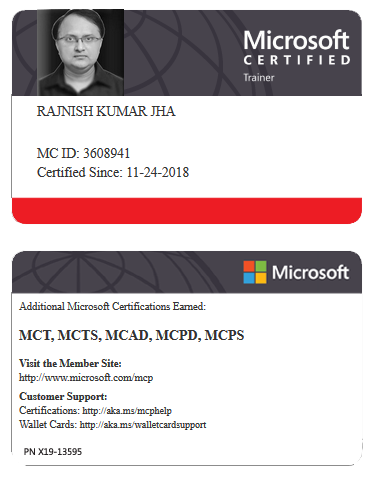
MCT, MCSA, MCSE, MCAD, MCPD, MCTS, MCSD
My name is Rajnish Kumar Jha. I am Technical architect on Azure Cloud and .NET since 21+ years. I’ve worked for pioneer companies and as freelance trainer/consultant helping my clients to achieve their IT goals.
I find blogging, a great way to share back what I’ve learned all through my professional journey. You are welcome to connect or share feedback/suggestion here or through an email.
My MCT card (Microsoft)
My Certifications








Popular Posts





Stay Connected
Unlock the full potential of Azure Cloud with me
– Your trusted guide to Azure mastery!
SUBSCRIBE
My newsletter for exclusive content and offers. Type email and hit Enter.
No spam ever. Unsubscribe anytime.
Read the Privacy Policy.